

Featured, Publishing Voices
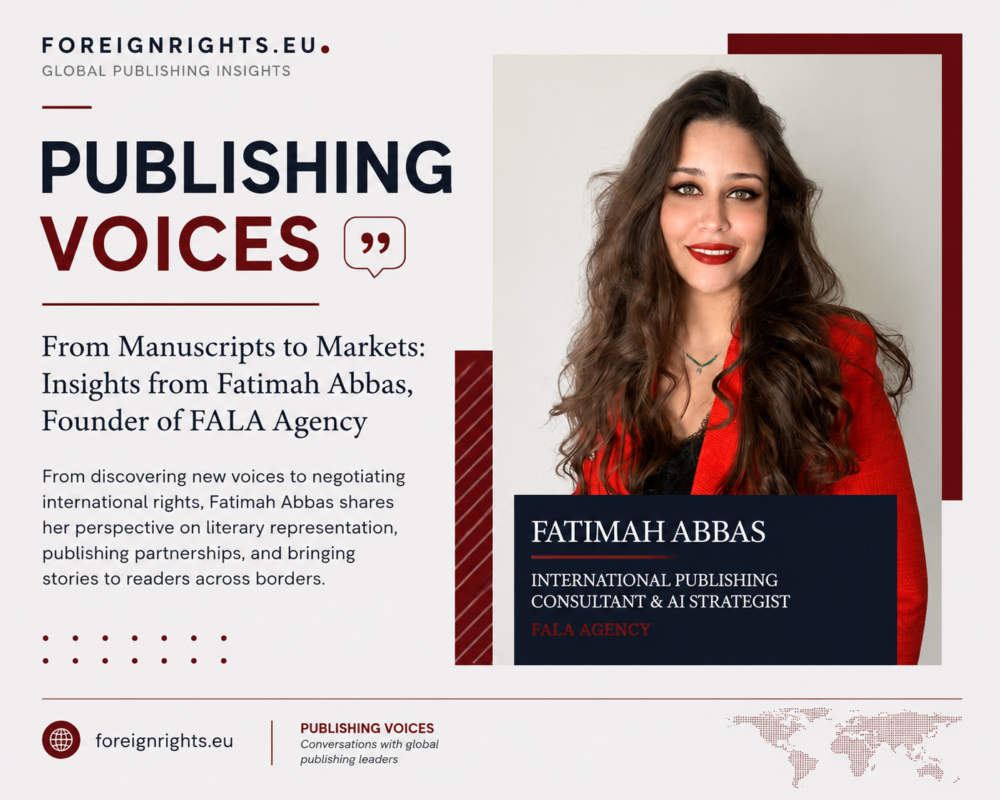
From Manuscripts to Markets: Insights from Fatimah Abbas, Founder of FALA Agency
Jul
Fatimah Abbas discusses the evolving role of literary agencies, the journey from manuscript to marketplace, and the opportunities shaping today’s international publishing industry.
At the crossroads of global publishing, literary agents play a crucial role in shaping how stories travel across borders. In this interview, Fatimah Abbas—International Publishing Consultant, AI Strategist, and founder of FALA Agency— speaks with Pigi Paideias and Evangelia Tziaka, sharing her insights on the evolving landscape of rights and representation. From the transformative power of book fairs and the challenges of navigating contracts, censorship, and burnout, to the way agents have shifted from middlemen to strategic partners, she offers a candid look at the realities of the profession. Fatimah highlights the importance of tailored pitching, stamina at major fairs, and the skills of negotiation, empathy, and patience that define successful agents today. She also points to emerging markets in Southeast Asia, Arabic literature in Europe, and Latin America’s growing interest in African and Asian voices, while emphasizing the need to balance commercial potential with cultural value. With trends like global audio rights, multi-format storytelling, and the rise of AI licensing reshaping the field, Fatimah’s reflections remind us that at the heart of agenting lies the enduring passion for building bridges through literature.
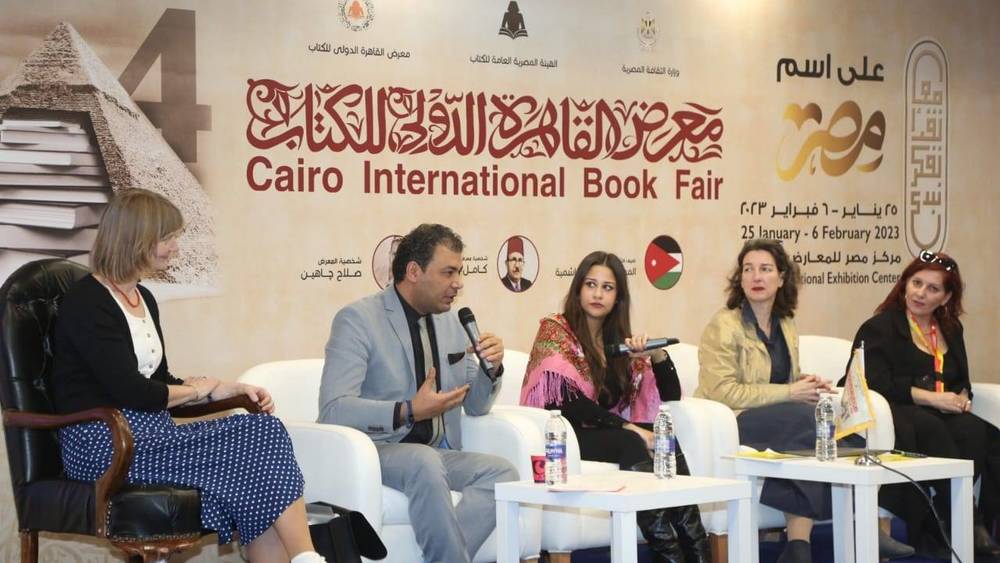
As a literary agent, what role do international book fairs play in securing rights deals and expanding your authors’ reach?
Book fairs are more than just business hubs—they’re relationship ecosystems. Some of my most successful rights deals began with a coffee chat or an unexpected introduction at a fair. These events allow me to position titles in front of the right people at the right moment, in a context where everyone is open to discovery. It’s about timing, preparation, and human connection.
What are some of the most common challenges literary agents face today in the rights and publishing ecosystem?
The ecosystem is constantly shifting. One day you’re dealing with the slow pace of contracts, the next you’re navigating grant applications, censorship, or fluctuating currencies. It’s also increasingly difficult to balance commercial pressure with the responsibility to champion diverse, underrepresented voices. And let’s not forget how burnout has become a real issue, especially for agents trying to do it all.
Has the role of the agent changed over the last decade — especially in the face of digital platforms and self-publishing?
Completely. The role has evolved from being a middleman to becoming a strategic partner. Agents today are expected to understand digital formats, negotiate across multiple rights (audio, film, digital), manage data and metadata, and even assist with branding. I spend as much time thinking about a book’s market trajectory as I do on the actual manuscript.
What strategies have proven most effective for you when pitching titles to international publishers?
Tailoring the pitch. I never approach two publishers the same way. I try to match each book not only to a publisher’s list but to their personality and priorities. Also, timing matters. Some titles work best right before a fair; others need space and quiet conversations. And a well-chosen excerpt—especially one that carries emotional or narrative punch—can open doors faster than a summary.
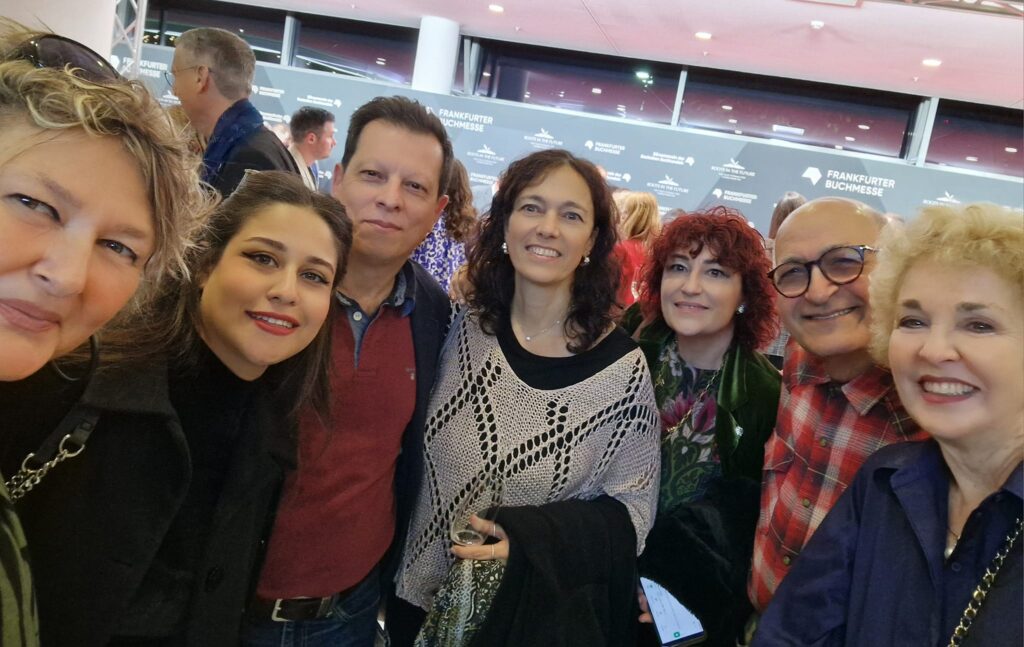
What are some key things a literary agent should be prepared for when attending major fairs like Frankfurt or London?
Stamina and clarity. It’s a marathon of back-to-back meetings, and you need to be fully present in each one. Knowing your list inside out helps, but so does preparing clear follow-ups and organizing your rights deck like a toolkit, not a catalogue. Also, build in time for chance encounters. Some of the most interesting conversations happen in the hallways.
What advice would you give to aspiring or early-career literary agents entering the industry today?
Be endlessly curious. Learn the business side as deeply as you dive into the creative. Know your contracts, your markets, and your authors’ visions. And don’t be afraid to ask questions. This is an industry that rewards relationship-building and long memory—your integrity will be your currency.
What core skills and qualities do you believe are essential for someone starting out as a literary agent?
Negotiation, empathy, and patience. You need to be persistent without being pushy, and diplomatic without losing your edge. A good agent knows when to fight for a better deal—and when to walk away. And you absolutely need to be organized; this job is a constant dance between spreadsheets and stories.
How do you build trust and long-term relationships with both authors and publishers?
By being transparent and consistent. I always tell both parties the truth—even when it’s uncomfortable. I follow up, I keep communication open, and I try to make each collaboration feel personal. People come back to work with you when they feel seen, not just signed.
Are there particular markets or regions that you see growing in demand for translated literature?
Yes—Southeast Asia is becoming more open to global voices, and interest in Arabic literature is steadily growing in Europe. Latin American publishers are also exploring more African and Asian voices. There’s a beautiful shift happening where publishers are no longer just looking west—they’re looking in all directions.
How do you approach balancing the commercial potential of a work with its artistic or cultural value?
It’s a constant calibration. I believe some books deserve to travel even if they won’t be bestsellers. If a title carries cultural weight, unique perspective, or emotional truth, I try to find the right champion for it—even if it’s not the biggest deal. I’ve learned that the right match can do far more than the highest offer.
What trends are you currently observing in the rights market that new agents or authors should be aware of?
Audio rights are still expanding globally, especially in non-English languages. There’s a real hunger for smart, narrative nonfiction, particularly in the post-pandemic space. Also, publishers are increasingly asking about “multi-format potential”—from podcasts to film. Finally, AI and digital licensing are beginning to enter our conversations in more serious ways. It’s no longer theoretical.
Lastly, what keeps you passionate about agenting, even amidst the industry’s many shifts and challenges?
I think it’s the moments when I see a book cross borders and move someone miles away from where it was written. That sense of impact—of building bridges through literature—never gets old. I still get goosebumps when a book finds the right home, or when a publisher writes back saying, “I couldn’t put it down.”
Υοu were one of the founders of the Publishers Without Borders. What are your perspectives about this team of publishers?
- It started during lockdown as a spontaneous idea—and grew into one of the most generous, collaborative communities in our field. We built friendships across continents, supported each other when the industry felt uncertain, and created a space that’s rooted in joy, not just productivity. It’s proof that the publishing world can be global, warm, and wildly human.
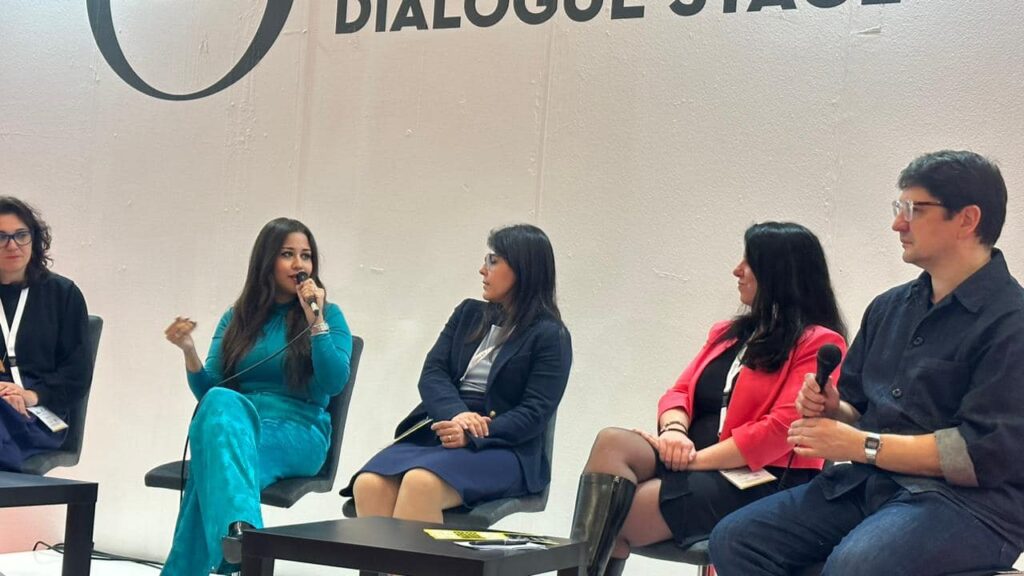
As our conversation with Fatimah Abbas draws to a close, one thing becomes clear: the role of the literary agent is not only about deals and negotiations, but about vision, resilience, and human connection. In an industry marked by constant change, her insights reaffirm the timeless value of literature as a bridge across cultures.
We sincerely thank Fatimah Abbas for sharing her expertise and inspiration with Pigi Paideias and Evangelia Tziaka—and for reminding us that stories, when guided with care, have the power to transcend borders and transform lives.
This interview was originally conducted for Pigi Paideias Project and is republished on ForeignRights.eu as part of the Publishing Voices series.
